Friday, September 14, 2018

Evacuating in front of a Hurricane, some stay, some leave, why do they stay when only 30% are prepared for it.


Hurricanes are common throughout the world, and many times evacuation is ordered by elected officials. Organizing a mass movement of people during a stressful situation is a major undertaking, just to order an evacuation is a complicated issue. Hurricane Florance is beginning to roar through several of the Southeastern States, it has been reduced to a Catagory 1 storm with 90 miles per wind. That is a big wind, some longtime residents of the states affected use the word "only" in front of Catagory 1 status. Many of them are experienced in dealing with Hurricanes and will only leave their homes if the storm is a Cat. 3 or larger. It used to puzzle me as to why anyone would stay, but there are actually good reasons why that choice is made. Some have no choice but to stay, others feel as if the storm is a minor inconvenience, there is a lot of thought put into the choice for some and others treat it as a passing fancy.

Evacuating ones home is often a difficult decision to make for many people. Those of us removed may take the position as I do, at the first indication of a Hurricane I am out of here. I have a sneaky suspicion that applies only to people like me with limited or no knowledge, or experience of the storms to make a decision. Perhaps it is much like the threat of the "Big" earthquake in the western states, there are so many small ones the threat doesn't register. That too is experience dealing with a natural disaster, it's the same in the North with blizzards. Preparation for one of these catastrophes' is normally a goal for 30% of any population, human nature is to wait until the threat is realized and upon us. Three groups of people define the preparation undertaken prior to an event, 30% prepare in one form or another, 30% feel as if they should, and 30% are totally indifferent. The lack of preparation makes evacuation more difficult if those under orders to leave all head for the grocery, and big box stores after the directives are issued, it is making a difficult situation worse. Some residents choose not to leave their homes, the reasons are varied, and many seem to be logical decisions. Listed below are some of the reasons people make a decision to stay.

A 150-mile drive was planned by one married couple to evacuate their home in Wilmington, North Carolina to Raleigh. That city is projected to receive the brunt of Florence as well, the same with the second choice they had made which is a 4-hour drive from their home. Realizing they were not making the situation better by relocating they decided to remain home with four children, two exchange students, and their pets. It is just too hard to find somewhere to evacuate to, is the justification. During Hurricane Harvey, 60 deaths were realized on the highway due to people evacuating, the main reason an evacuation was not put into effect during that disaster. 60 casualties were approximately 1/2 of the 118 fatalities realized as a result of Harvey. It is a serious consideration to put upwards of 5 million people on the roads with the purpose of evacuating.
During a Hurricane is no time to decide to
evacuate.

A vehicle is required to leave an area and unfortunately, not everyone has access to one, some have never learned to drive, and others cannot afford one. Bus tickets out of town are expensive and like airplane tickets price gouging is common, using the excuse of "supply and demand". However planes don't fly during a Hurricane, already more than 1,000 flights out of Virginia and the Carolina's have been canceled, all flights will be at some point. Fuel for a long distance retreat is expensive and some people simply can not afford to leave. Often the roads are dangerous and jammed up making them a danger of their own, and gas stations run out of fuel. These are seen as being riskier than staying in the house and facing the storm.

Finding a place to go to is a daunting task due to the changing characteristics of the storm, it would be crazy to take off driving with no destination in mind. That is one reason evacuation orders are withheld until the last few days before landfall, first responders need to know where to head to as well, no one knows until the Hurricane is nearly on top of the affected areas. Staying with family or friends is the most desirable result, and works out well for those that have that option available. Otherwise, it means spending money many people don't have on a hotel, motel, or short-term renting of an apartment or another shelter.

Disabled people may face a situation more hazardous to their health than the Hurricane presents. A long grueling journey to a severely disabled person or a patient who is terminal may be unsurvivable to those in that state of health. Twelve residents in an elderly home died during Irma last year due to the facility losing its electrical power causing heat exposure and dehydration. This situation was one that the people could not evacuate due to their medical conditions.

During Hurricane Katrina, 55% of those that stayed did not have access to a vehicle or other means of transportation. Another 68% did not have the funds or even a credit card to pay for the expenses an evacuation creates.

Leaving pets behind is difficult if not impossible decision for some to make, so they stay with their pet dogs, cats, or livestock. Motels in some instances do allow pets in the rooms, however, one pet is the limit, those with numerous animals are rejected or charged more to the point of unaffordability. Deciding to leave them behind to be on their own is most often certain death, they would encounter a scary situation which would cause them to panic without the comfort of their caretakers. Most pet owners will not subject their pets to that tragic end of life.
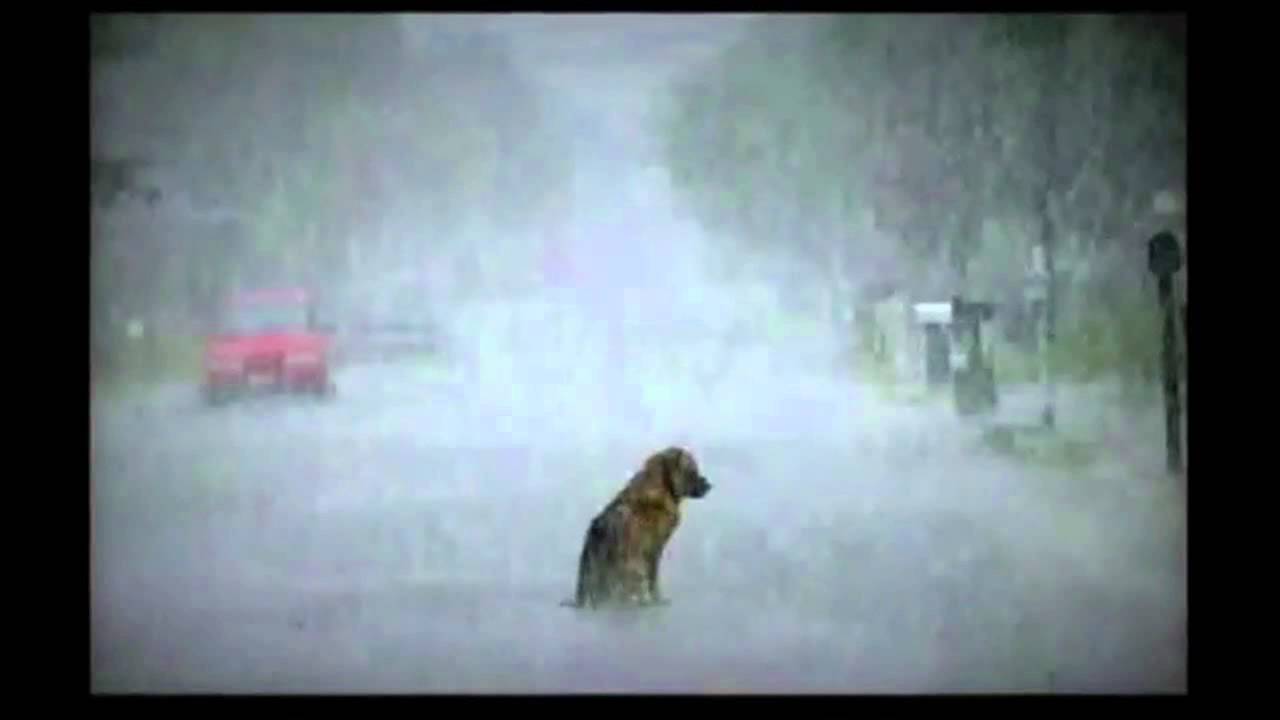
Abandoned pet, what's he to do?

To place the lives of loved ones and pets intentionally is not the goal of most of the people that decide to stay. When it comes down to it sometimes it is more difficult to leave than it is to stay. As with so many decisions we face in life this would be one of the hardest I could make as I am sure it is for the people that decide to stay. One of the unfortunate results of not evacuating is sometimes the storms increases and becomes more unstable as it wreaks its havoc. Second thoughts are not uncommon causing some to evacuate in the middle of the event when it is right over their head. A decision to leave at that time is almost always a fatal decision, but a decision it is and they leave a position of relative safety to one of the absence of safety.

The decision must be made on an individual basis, including the entire would be in the groups best interest. Thank you for reading and sharing my blog, let us all say a few prayers for the people in the path of the storm and hope for no deaths that are a direct result of this disastrous situation. Thanks once again.

jacquesandkate  Emergencykitsplus.com


Wednesday, September 12, 2018

Florence and Olivia will both make landfall soon, Governors are telling people to put a kit together, is it too late?


Hurricane Florence, 140 mph in the center, Catagory 4.
Impending doom and gloom are descending upon the Eastern Seaboard in the form of a Monster storm, Hurricane Florence is a big one. It may be recorded in history as making landfall the furthest north of any recorded event. People are pulling their boats from the water, boarding up their homes, filling up gas tanks, and as one evacuee put it "I'm all prayed up and ready to go". It is estimated 1.7 million people will be on the way out of the area predicted to be hit the hardest. The storm is now forecast to make landfall late Thursday evening, it seems these storms come ashore in the middle of the night. One million seven hundred thousand people is a lot of humanity to be all headed in the same direction on a highway. I don't want to get too far off subject but I think of what would happen if New York City (8 million) or the Los Angelos area (10 million) all had to leave town at once and head North. The evacuation appears to have started out in an organized manner, the South Easterners know how to react to Hurricanes, to second guess them would be cruel.

There is a lot I don't understand about these tropical storms, such as if I was faced with an evacuation I don't care if the Hurricane is a Catagory 1 or a 5, I would be out of Dodge early, like when it forms off the coast of Western Africa.  I was talking with an acquaintance from Florida about some of the actions people took during last years season when all of that state was impacted by Irene. I failed to understand why people were saying they would not leave their residence until the storm is a Cat 3 or greater.  "Are they nuts?" I asked her, the first drop of rain to hit me would be God's fault the second one would be mine I told her. She explained to me that the building codes had been changed to enable buildings to withstand a Cat 3, "Oh" was the only reply I had. I am a transplanted Northerner to California, I understand blizzards, tornadoes, floods, and a mixture of all of them, but Hurricanes I have very limited knowledge. The Lady from Florida told me she is deathly afraid of experiencing her first major earthquake, I answered: "prepare to be unimpressed, there are very few big ones."

When I was in Memphis Tennesee in the late 60's the tail end of a Hurricane that blew in from Louisiana raised cane with us. I had to receive stitches when a large window exploded into a million shards from the wind, fortunate to not be injured worse I appreciated the repair job performed on my leg. The Southwest gets the tail end of some Hurricanes that are driven North through the Sea of Cortez and drenching Arizona during the monsoon. As far North as I live the biggest impact may be a slight rain, but more than likely the only mention of it outside of the weather report is comments such as "holy cow it's humid".

Humidity for most of the country is a very real weather condition, one that people in the far west have a hard time relating to. Evacuations are not conducted to escape high Humidity, however, those who have never experienced it have no idea of its effect on us. My neighbor went to Texas two weeks ago, Austin to visit her grandchildren, I asked the native Californian how it went and what she thought of the Lone Star State. She told me it was wonderful, then they went to an amusement park when the temperature was nearing 100 F (38 C) and 100% humidity. "How'd it go for you?" I asked her. She replied, "Oh my gosh I thought I was going to die, I have never sweated so much in my life!"

Living in relatively low Humidity, actually, bone-dry air. Sure it's hot, dry, and dusty but as people here say "it's a dry heat." to which I reply "yeah, but so is an oven." I have found one of the two best ways to cope with weather is acceptance, my dear deceased dad would tell me "it's all in your head", in other words, the attitude I take affects my discomfort, and he was correct. The second is to prepare for these occurrences early, don't wait until the last minute.
Empty shelves greet us if we prepare too late.

Long prior to the threat of any natural disaster it is prudent to develop a plan for any possible disaster that may strike. Yes, I preach about this a lot, I hope not a sickening amount, it is important. I am inspired this go around because the Governor of South Carolina has been encouraging people to put an evacuation kit together and evacuate. Actually, the kit should have been put together a long time ago, the evacuation plan should have been practiced, and the communications plan should be firmly fixed in the victims' minds. With a Catagory 4 storm making landfall in two days, the big box stores are already out of the water, the gas stations are out of fuel, and the roads to the marinas blocked, now is really too late for anything but escape.

This Link will lead you to FEMA's disaster planning templates

A seven-day kit is my recommendation for a survival kit, commonly the first responding organizations suggest a 3-day kit. Three days is a good start, it doesn't take much more to extend that to a full week. In the kit is already everything a person needs for 3-days, lighting, fire starter, a blanket, and water. One 24 pack of pint water bottles is the amount required for one person one week, that equals 1/2 gallon a day for drinking. When adding hygienic needs and cooking we should add another 1/2 gallon per day. Really to expand that 3-day kit to a 7-day is adding more water, that is easy to accommodate by cycling the supply through our normal daily activities. A family of four can keep 8 cases on hand easily, using one case each week and on grocery day replace it, we easily consume that much water in a week. Depending upon the damage to the residence will determine if the food in your pantry is able to be used, likewise for the fridge. Regardless in your kit, there should be enough food to last a week, freeze-dried is best, include a pot to boil water with. A bar-b-que, camp stove, or even an open fire is suitable for boiling water to add dried meals to.

This is a typical evacuation kit available commercially prepared,
a good way to prepare. order one here


We cannot assume the food in the pantry or fridge is suitable as a food source especially if there is flooding involved. In the event, the food storage spaces are not impacted and the fridge was not flooded and remains cool we must determine on an individual basis if the supplies are safe. It is recommended to keep track of the temperature inside the refrigerator, that's a good practice, another one is to throw everything in the trash after 3 days, earlier if spoilage is evident. It is not worth risking severe illness because we don't want to "waste" what we have, toss it in the trash without a thought.

Water may be stored in the freezer, it will supply two needs, the first is it will extend the time the freezer temp will stay cold enough to preserve the food, the second is as it melts it may be used for drinking, hygienic, and cooking needs. Gallon zip lock bags work alright, it's not the best way to accomplish this but it will work just fine. A much better way is to purchase water containers made for that purpose, they are low profile allowing them to be placed on the bottom of the freezer and food stack on top of them. Some have a spigot on them and others are merely capped off, any of the three methods will save your food.

Never under any circumstances use flood water for any purpose, it is totally polluted, we don't have any idea what is carried along in it after sweeping over lawns, golf courses, and industrial facilities to name a few. Do not bath in it, wade or swim in it, or attempt to purify it. Likewise, if a well is the supply of water, it is tainted and must not be used until it is tested by a certified lab and declared safe by them. Use only water that is in sealed containers and you know is safe.

Don't mess around with flood water, it's toxic.


A man was interviewed on one of the cable channels, he was pushing a generator on a cart. One of his comments was he had endured a three week period without electrical service last year when Irene hit; he stated that was not going to happen to him again. Personally, the only reason I would purchase one would be to save the food in the freezer and make coffee, in fact, coffee would be my #1 reason. Propane powered coffee makers are available, it would double as a means of heating water for meal preparations also. There are a lot of supplies that fit into the category of personal decisions, sanitation stations, cooking facilities, shelter in the form of a tent, and lighting all are personal choice items.

An extended list of items that "we" need in a kit is pretty useless unless it is custom made for my or your individual or family needs. The commercially available kits have all of the basic stuff we need to survive but they also do not contain the special individual items of which each one of us has. Medication, special hygienic items, coffee cups (and swiss miss chocolate for mine if you please.) and that really warm vest to add security and comfort. Our pets must be taken into consideration also.

In our emergency planning the family cat, dog, birds, and fish must be taken into consideration. A portable cage for the bird and a gallon mason jar for aquatic pets are a must for them. As for the family dog and cat, fliers may be made up early and placed into the evacuation kits of each family member. Take a photo of your pet and all of the family members, people are more apt to recognize the animal when the owners face is near it because most of the time, with dogs at least, they are seen with their human owners. Cats, on the one hand, hide close to the house many times when they panic and are found in a great number of cases. Dogs, however, run fast, far, and are panic-stricken, rarely are they found after a flood, fire, or total destruction. I have a dog that would disappear, she would panic and run off into the woods never to be seen again, so my priority is to contain her and keep her safe.

A photo like this is perfect.


I want to commemorate the anniversary of the attack on the Twin Towers, 9/11 as we refer to it, the pain of losing loved ones is never eased. Many of the people, everyone involved was either killed or forever scarred by that event, I'm sure the nightmares are never-ending. Our foster daughters brother was servicing an air conditioner in the second tower on that fateful day, he heard the explosions and climbed out of the duct work. He hit the deck running and escaped physically unharmed, mentally is much different. Within six months he moved his family to Oregon and works only on residential homes.

The human tragedy is the aftermath of every disaster, some on a large scale, some on an individual level but all are devastating to the victims. Now we are heading into Hurricane season, while we are in the midst of wildfire season, and Tornado season right around the corner. Hawaii is dealing with another Hurricane one month after the most recent one struck that island, all the while Lava flows into the ocean. Olivia will make landfall almost in the exact spot where the Lava filled in a bay. When rainfall is measured in feet versus inches, we know we are in a deadly situation. Thanks for reading and sharing my blog, we can all help with monetary donations or direct to relatives and friends, prayers are always in line. As is preparing for our own moment which is sure to come at some time, prepare for the worst and hope for the best.

jacquesandkate  emergencykitsplus.com


Monday, September 10, 2018

Hurricanes move from East to West, it works well for the West Coast, not so much for the Eastern Seaboard.

Hurricane Florence heading towards the East Coast.

I posted this blog one year ago at the beginning of Hurricane season now another season is upon us. There are numerous storms in the Eastern Atlantic ocean, Hurricane Florence is barreling down on Florida as this is being written. It is now at 75 miles per hour wind speed, it must be 74 mph to qualify as a Category 1 storm, Florence is just over the threshold. Helene and Issac are right behind the first one, their path has not been determined however over the next few days it will be.
Hurricane Olivia heading towards Hawaii.

Hurricane Olivia is heading for the Hawaiian Islands, churning away at 80 miles per hour it is also just over the lower limit to be a Catagory 1 storm. It is Northeast of Hilo and is expected to make landfall as early as Tuesday evening. The island state is expecting a direct hit from this storm, unlike Hurrican Lane that dropped 50 inches of rain last month. The second Hurricane in as many months to impact them, one curious thing did occur during that storm. The volcano was still spewing Lava into the ocean not too far from Hilo when the storm struck it was reported the volcano stepped back a bit and took a break. It did not completely cease the flow but reduced it dramatically, however, geologists are expecting it to build up the pressure and begin flowing in earnest once again.

Hurricanes move from East to West on the West coast, and East to West on the East coast, then when they move north towards New York they take a turn and head West towards Europe. It's a curious thing why we in the West never get impacted by them, I explain it in this blog. Hurricanes that travel up Baja California through the Sea of Cortez do affect us minimally after the tail end works it's way through Arizona and heads Westward. Normally the reaction from residents in California is one of "Gee, it's humid." Hurricanes need warm water to gain strength, the Pacific Ocean is increasingly colder the further North one goes. Cold water is a Hurricane killer, the storms need fuel and warm water supplies that energy. Other conditions impact the typically tropical storms as well, in this blog I discuss a few more.

Hurricanes are flaky, unpredictable, powerful, very destructive and very wet, they are a water-fueled event, losing much of their strength after achieving landfall. How are they formed, where and how do they gain and lose their strength? It's not really complicated but there is a lot to the formation of a Hurricane, I will explore and explain the catastrophic beginnings that impact the East Coast of the United States, I will describe the steps as they occur throughout the world.

Tropical Hurricanes are fickle, all of the right conditions must be present in order for one to begin to form, as soon as those conditions break down, so does the storm. Mostly all Hurricanes (Cyclones are nearly the same, I will refer to both as "Hurricanes") have a beginning as a "tropical disturbance". Areas of thunderstorms and active weather in the tropics, in the case of our "Eastern" impacting storms most, originate off the coast of Africa. Often "cold fronts" coming from the North make their way into tropical areas, meeting the warm air and ocean of the tropics. During Hurricane season unsettled stormy weather referred to as a "tropical wave" will blow over the Atlantic from Africa. Several conditions must be met in order for these areas to form into a tropical storm or Hurricane, they are:

  1) It must be a tropical thunderstorm

  2) It must be 300 miles from the equator. (500 kilometers)

  3) The water temperature of the ocean must be 80 degrees F (27C) or warmer to a depth of at least 165 feet deep (50 meters approx.) in the ocean.

  4) The atmosphere must be saturated with moisture.

  5) Very low wind shear is needed. too much and the storm will not be able to spin.
Some must grab what they can and flee.

A tropical storm will form once all of these conditions are met, the pressure in the center of the depression will drop allowing strong winds to rush towards it when it achieves a wind speed of 39 miles per hour it is then officially called a "tropical storm", it is then named. Irma performed just like this on August 30th, 2017 picking up speed and energy as it transversed the Atlantic Ocean driven by the trade winds. Measuring and tracking all of the data collected by means of instruments on islands, buoy's and aircraft that fly directly into the storms measuring wind speeds. Predicting the path of a storm as well as all of the parameter's involved is expensive, each prediction cost several million dollars, many lives are saved when the predictions are accurate.

Hurricanes gather energy as they move across regions of water that is warmer than is common, and the wind shear is minimal causing the pressure in the eye to drop even further. That is when the wind really intensifies, as the monster is being created it is able to gain or lose strength as it progresses across the wide span of warm tropic water. Hurricanes are cataloged as dictated by the Saffir-Simpson scale, the base measurement is their wind speed, then a prediction of the extent of potential damage is enabled. When the wind speed is 74 miles per hour or greater the tropical storm is then categorized as a Hurricane. There are 5 Hurricane categories, most of us have heard the terminology I will list and briefly explain them:

Lightning and thunder are part of it all, tornadoes are as well.

  1) Category 1: Wind speed of 74-95 mph, minor damage forecast, injuries to humans minimal and isolated, short-term power outages.

  2) Category 2: Wind speed of 96-110, property damage is significant with flooding, falling and blowing debris increases the threat to humans, power outages become a multi-day event.

  3) Category 3: Wind speed of 111-130 mph, property damage is intensive with mobile homes destroyed and extensive flooding, evacuations of humans are mandatory, lose of all utilities for up to several weeks.

  4) Category 4: Wind speed of 131-151 mph, great property damage is incurred houses and structures destroyed beyond repair, the threat of death is serious in certain areas for humans, very long-term utility outages.

  5) Category 5: Wind speed of greater than 155mph, complete destruction of homes and shopping centers, many trees are blown over uprooting them, the possibility of lack of utilities is extended to months.

For a comparison Hurricane Irma achieved wind speeds of 185 miles per hour, that's a powerful wind. I was once in a wind storm that had gusting winds of up to 80 mph, once in a while we have those kinds of winds, it destroyed our dock, breaking the 12" diameter wood pylons off at the mud line on the bottom. I was on the dock at the time tying down a huge boat we were storing for a person, the wind caught the boat by the broadside causing pressure on the pylons. The first pylon sounded like an explosion, then immediately after that the other two snapped, the wind is powerful.

That's how Hurricanes are made, and it's only one half of the Hurricanes life cycle, the second act is the degrading cycle and how it loses it's energy and dissipates into thin air. Warm moist water feeds them, the warmer the ocean temp the more energy a Hurricane gathers, that is until it makes landfall. As the storm loses the warm water it weakens, there is no water over land so they basically run out of gas however when they reach wind speeds of under 75 miles per hour they are downgraded to "tropical storm" status. A Hurricane can head back out to sea, enabling it to once again achieve wind speeds that classify it as a Hurricane, sometimes as with Hurricane Hermine in 2016 they make landfall and are downgraded only to energize after returning to sea, they can make landfall again. But when the Hurricane is on land it gradually weakens to the point of becoming a heavy rain event as it moves North, dumping great amounts of rain with gusting winds it is doomed to never live in its glory days ever again, it has died.

Even though not classified as a Hurricane a tropical storm is still capable of causing extensive damage, as in 2012 "Super-storm Sandy" was not a Hurricane when it made landfall and destroyed New Jersey and New York. It's hard to even imagine a storm being more destructive than a tropical storm that morphs into a Hurricane, I've tried in my mind to equate blizzards and wildfire destruction to them, there is a very little comparison outside of the massive destruction. When combined the extremely high winds and massive amounts of rain causing flooding, as well as the unbelievable cleanup in its path,  make Hurricanes one of the worst storms we encounter. It's actually bad business to compare disasters, they are all horrific when we are in the position of surviving them.

The people in Houston, Puerto Rico and Florida lost everything last year, as I explained it to one of my grandson's (20 years old), if they want to brush their teeth all they need is a toothbrush but they don't have one, neither does the store, a mop, nope, how about socks no don't have them either, same with everything, they lost it all. Recovering will take many years if they can recover completely is another question, it takes hundreds of years to build a city or state and when they are destroyed in mere days the old sing-song "Rome wasn't built in a day", takes on a whole new meaning.

Thanks for reading and sharing, leave a comment or question, good weather predictions, preparation for the storms, and evacuating when necessary will save many lives.


jacquesandkate  emergencykitsplus.com

Saturday, September 8, 2018

Life as a Knights Templar was guided by Rules and laws, here are the 68 laws that governed them.

Many people are interested in the Knights Templar, in my searching and reading I came across this article on History.com. I had read these rules several times in other publications finding them at least interesting and at most intriguing. Depending upon the publication the text is different, perhaps it is due to translation. None the less it is quite interesting due to the strictness, and it gives us (me) an insight on how the leaders of the Catholic Church thought and spoke. The article also gives an insight into their self-reliance, self-awareness, and personal responsibility as spelled out in the laws they were bound to.

One of the most interesting points is the lack of religious guidelines in the rulebook, it appears the Church was mostly interested in discipline for waging war. The rulebook does not mention anything pertaining to the rituals involved in becoming a Templar, I have read some accounts of those and they are bone chilling.

But even in the laws, it is mentioning the "Real Cross", it conjures up questions about the validity, did they have in their possession the "Cross" of the Crucifixion of Christ? This is not a historic recording of the "treasures" that were unearthed or the riches the Templars supposedly had in their possession, it is a list of the guidelines for the behavior the Knights were sworn to conduct themselves by. They were warrior Prests and were expected by the Church to conduct themselves as such.

To read the Rules and Laws follow this Link, it is a fairly short 10-minute reading time.

Thanks for taking the time to read and share this blog, this is the first time I have reposted an article from another site, generally, my blogs are all 100% original. It's my thought there is universal interest in this mysterious and interesting part of human history, and a needed break from the wildfires, floods, earthquakes, and all of the other "stuff" dominating the airwaves. Thanks again for reading, leave a comment, in the meantime, I will search for some accounts of the hazings for admittance to the Knights Templar sect. I have traced my lineage back to 900 AD and discovered a Knight with my surname, however not a direct descendent because they did not have children.

jacquesandkate   emergencykitsplus.com

Thursday, September 6, 2018

All boaters, jet skiers, and any other water craft operators should be aware of this new law.

There is always something going on at the launch ramps.
It's been a relatively quiet summer on the California Delta due to the cool weather, wind, and the smoke-filled air which translates into there being few boaters on the water, and fewer accidents. There have been several, each one is a major trauma to the people who live through them.

I had a supervisor that was involved in a horrific accident when he was a young man, he was uninjured. Driving a large Cabin Cruiser he headed into a large open waterway, he was not going very fast, when his boat was hit broadside by a speedboat. The speeding boat went through his cruiser, one person died, both of the boats were destroyed beyond repair. He told me he was in his early twenty's and has never gone on another boat since then. His was a life-changing experience because prior to that the rivers were a major part of his life having been raised on the Delta.

I am writing this blog to open a discussion on the pending implication of the state requiring operators to earn a boating certificate. It's a drivers license for boating, and it will be phased in over several years beginning January 1st, 2018. Yes it has already begun so I am behind the eight ball a little bit, but pay no mind there is plenty to look at, let's get started.

There are 4 million boaters in the state of California many unaware of a drastic change in the boating laws. Beginning January 1st, 2018 all operators will be required to have in their possession while boating a "California Boaters Card". There is no need to panic immediately, it will be phased in over a several year period.

What is this Boaters Card? It is essentially a driver license for operating a recreational watercraft on the waterways in the State of California. Senate Bill 941 was signed into law on September 18, 2014, by Governor Jerry Brown. It is a mandate that requires operators to take a boaters safety course and pass a test. The first phase takes effect on January 1st, 2018 requiring all boaters under the age of 20 years to make up the first phase. All other boaters are required to be licensed in the year 2025, it is a slow methodical introduction. Up until now, Calfornia was just one of five states that did not require some sort of formal education and a qualifying test for issuance of a operators permit, it is past due. The U.S. Coast Guard accident records show that states requiring some form of waterway safety instruction have fewer deaths and accidents than those without the requirements.
A photo of a Calfornia Boater Card.

Boating accidents in this state are a major issue, during 2015 there were 369 accidents on the water, resulting in 48 deaths, one death is too many. The Coast Guard found most of the incidents involved boaters with no water safety education at all. This bill was passed with the intent to promote safe boating and raise awareness of the dangers on all of our waterways. The state legislature believes by making it mandatory and increasing the number of educated boaters will benefit all boaters by making the recreational activity safer. The goal is, of course, to eliminate all boating accidents on the water after all they believe as I do educated boaters are safer boaters.

Beginning this year the requirement will be implemented in eight phases, those under 20 years are first.

* January 1, 2018; All persons 20 years and younger

* January 1, 2019; Those 25 years of age and younger will be required.

*January 1, 2020; People 35 years old and under.

* January 1, 2021; Will include all people 40 years and younger.

* January 1, 2022; 45 years old and under.

* January 1, 2023; Boaters 50 years and younger

* January 1, 2024; Includes those 60 and younger

* January 1, 2025; will include everyone, even us spring chickens.

It appears to be a long process, but it's good this way mostly because the chances of me being required to have one is so far off in the future It may be moot at least in my case. There are exceptions to the law, below is a complete listing:

1) People who are residents of another state or foreign country and meets these requirements;
     * They are using the waterways for a period, not in excess of 60 days and meets the requirements of their state of residence.
      * It's a little different if a person is from another country, they can use the waterways not to exceed 90 days and meets what is consistent with the laws of their native residence.

2) When operating a watercraft under the direct supervision of a person in possession of a Boaters Operators Card pursuant to subdivision B of section 678 or one who is not required to have a Card as pointed out in paragraph 6.

3) When operating a vessel in a race, water ski race, or a regatta.

4) People operating rented watercraft.

5) A fisherman who is in possession of a current commercial fishing license.

6) If you are in possession of a valid marine operator license, for the waters upon which the holder is operating, and issued by the U.S. Coast Guard, or who has in their possession a valid certificate issued pursuant to the International Convention on Standards of Training, Certification, and Watchkeeping for Seafarers, 1978, as amended.

7) A person that has completed successfully a boating course approved by the Commission on Peace Officer Standards and Training.
As I read it, the law requires this guy to have one also.

So how do I go about getting a California Boater Card? There are two steps as listed below;

* We must complete a boating safety course approved by NASBLA and state approved by the California Division of Boating and Waterways, available online, in a classroom, or home study courses. An online course is available from Boat-Ed.com/California, it will fulfill all of the California State requirements. Once the course is completed we may then move to the next step.

* Apply for the California Boater Card online, applications may be completed at CaliforniaBoatingCard.com (accessible through this Link.)

Of course, if we don't comply with the new law there will be penalties.

+ The first violation is a fine of no more than one hundred dollars, ($100.00)

+  A second conviction is a fine of no more than two hundred fifty dollars, ($250.00)

+ For a third and over the fine will be not over five hundred American greenbacks. ($500.00)

Follow this Link to learn more about this new law
(This Link has a detailed description of the regulations and boating laws of the state.)

That sums up the new California Boater Card law, this is by far not all we need to know about it, but there is plenty of information available online. Thanks for reading and sharing my blog, follow me on Facebook and visit my website at http:www//emergencykitsplus.com
Thanks again, and be safe on the water.

jacquesandkate  EmergencyKitsPlus.com


Tuesday, September 4, 2018

A ballot initiative in the Calf. November election will eliminate Daylight Savings time, what do you think, for or against?

I first posted this blog November 8, 2017. I decided to update it and repost it due to a curious dialogue that is now taking place. There is a proposition on this Novembers ballot in California to eliminate daylight savings time entirely and go back to before the "Daylight Savings Act" was passed in 1949. I personally am indifferent to the outcome, mostly because I don't work and every day is a Saturday for me. Working into the equation is whether one is a morning or night person, but how much that matters is unclear, changing clocks is a minor inconvenience, and the savings of electricity is a tough one to figure out.

* A morning person (as I am) will continue to wake up at the same time set in our biological clock, we're early risers anyway.

* The changing of clocks, well I must say, who really cares about that? The TV changes itself, as does my laptop, so that leaves the microwave, bedside clock, and what else the stove? OK, that's minor, the toughest part is trying to figure out what the time actually is, no one I know wears a wristwatch any longer. I turn on the television and get the time from it. Good grief what have we been reduced to?
OK, whose turn is it to turn the clock back? Climb
on up there and get it done!

* Saving electricity? I don't remember the last time I went to an establishment and the lights were not on, and air conditioning running, no matter the time I entered. Although Labor Day I had an appointment at the Veterans Clinic, no one was there it was a holiday. The security guard let my wife and me in, only 1/2 the lights were on, but the air conditioner was still running. I'm sure the building remained that way until Tuesday morning.

* The embarrassment of arriving late for church, school, or an appointment the next day may be a reason I suppose to oppose it. Slinking in a church for the 7am service to be met with the Pastor exclaiming: "Well here's some more that didn't turn their clocks back." Yes, that's us, walking in late, but that's only one day out of the year, and if that's the worse embarrassment I will endure all year I'm a lucky person.

I enjoyed writing this blog partly because I could blame the Canadians for it, (My granddad was from Ontario). It's actually a concept I never really did understand why it is practiced. However like the Native Americans said: " Only the U.S. Government could believe by cutting the bottom off of a blanket and sewing it to the top, does the blanket get longer." There is an interesting history behind daylight savings time.


If there is blame to be made, I will blame the Canadians, the Canadians of Thunder Bay to be precise. On the other hand, if credit is to be placed, the credit should go to the Canadians of Thunder Bay. (That's how I see Daylight Savings time) In 1908 Thunder Bay, Canada was the first city to initiate Daylight Savings Time. Adopting the time change 8 full years before the first countries, Austria and Germany, the year was 1916, long after the Canadians set their clocks forward on July 1st, 1908, in that year Port Arthur was the name of Thunder Bay. The Germans (and Austrians) reason for choosing that date to begin the time change was to conserve fuel, (by using less electricity), for the war effort.

Thunder Bay Canada, home of daylight savings time. July 1, 1908.


Daylight Savings Time began in those countries 2 years after the commencement of World War 1. Within weeks Great Britain, France, and many other countries joined in changing the time of their respective countries, most reverting back to standard time year around when the war ended. World War 2 saw the return of the now common practice, becoming the norm after the war had ended.

Benjamin Franklin had some friends that had invented a new style of an oil lamp, they thought up a scheme to sell more oil by extending the time people spent in the dark. They tried to involve old Ben and attempted to continue correspondence with him to help make their idea a success. It was not brought to fruition. It took another 125 years (approximately) to be a part of Canadian life in 1908.

  Daylight savings was first documented it is today as the idea of a London contractor William Willet (1858-1915). It was documented in a pamphlet he wrote "Waste of Daylight", this idea would be unrecognizable as being the same daylight savings that are employed in current times. His proposal was to advance clocks on four Sundays in April by 20 minutes, then in September retard four Sundays by 20 minutes. He first conceived the idea during a Sunday morning ride through Petts Wood. He remarked that the blinds were shut tight in nearly every home even though the Sun had fully risen in the East. His thinking was the early morning hours of summer and spring were seldom used or seen, people closed their blinds and slept in. Willets idea impressed an MP, Sir Robert Pearce, inspiring him to draft a bill to make it mandatory to advance then retard the time. The bill was introduced in 1909, fiercely debated, met with ridicule and opposition, the bill failed. One segment of society that was strongly opposed to changing the time were the farmers when bills don't have the support of the people, they have an extremely difficult time passing. How many people would have put up with the complicated method that was suggested? I dare to say very few.

Love 'em or Hate 'em, they make the rules, and the politicians really wanted to enact Daylight Savings on us, the needy hordes.

Following Germany's lead, Britain did pass an act May 17, 1916, it employed Willets idea of adding 80 minutes during four consecutive Sundays, it was placed into practice on the first Sunday after the act was adopted. Opposition, confusion, prejudice, and debate followed the passage. In fact, the Royal Meteorological Society demanded the tides remain to be on Greenwich time. Some businesses and Government agencies opted to remain on "Standard Time", it was a confusing mess those first few years. Some people feared the time change would change sometimes of birth, impacting inheritance and other family matters. In 1925, after World War 1, a law was passed proclaiming summer will begin the day following the third Saturday in April, one week earlier if it lands on Easter. During WW2 the clocks in Britain were advanced two hours from April through October, dubbed the end of Summer. The day after the first Saturday in October, was the end of Summer. Whew! It's no wonder I can never figure out when the clocks are supposed to be changed.

(The politicians are at it again this Link will lead you to the San Diego Union-Tribunes story on the reasoning behind it.)

My wife and I woke up on Saturday morning, she asked me about DST and if I had set the clocks before we went to bed. I did not, and by that time we were wide awake and ready for that cup of coffee. We went to the kitchen and looked at the clock, 4:45 am, I turned to my wife and said: "Quarter to five, now what?" We stayed up, dozing off during the day, it was a rainy day so it fits right in with our inadvertent early rising. It's a quarter to five, I made the coffee, I'll set the clocks back tomorrow because today is Saturday we got confused, I can't imagine us with the 20-minute clock change for several Sundays in a row.

Those who support DST claim:

  40% of all the country's in the world are on DST, the reasoning is to conserve energy and utilize the daylight longer in the afternoon. Do we save energy after changing the clocks? Some supporters claim that the longer hour of daylight in the evening inspires people to leave their houses, for recreation or other activities. Leaving their homes means they are not using electricity thus saving energy, as well as improving their health due to people being active. The tourism industry claims to profit due to with longer sunlight more shopping is done, restaurants are busier and entertainment venues attract more patrons. Less artificial lighting is needed they claim, however the closer to the equator (light and dark are fairly equal) there is less of a need to "save" daylight. Proponents claim the roads are safer, it does make sense the longer it is light out the fewer hours people will have to drive after dark.

Then there are those in opposition:

DST does not save energy they claim, in 2006 the state of Indiana studied the effects of DST on the subject of energy conservation, the result was consumption was actually increased. The reason is in this modern (?) society with all the TV's, computers, and all of the electrical gear we own is being used whether or not the sun is up. I identify with that, I have a saying I stole from a friend in Oroville, "In my life, there are two times of the day, the time when the sun is out and the time when it's dark."

Studies linked the lack of sleep with workplace, automobile accidents, suicide, and miscarriages increase. It affects depression, and the one hour longer rest results in fewer heart attacks nationwide. There is some cost involved, New York City, for example, spent 1-1/2 million dollars on a dusk and darkness safety campaign.

I remember my first impression of DST, I was about 8 years old, being  "grounded", all I wanted to do was go outside. The time was 9:00, I remember because I looked at the clock in misery, everyone was outside playing in the bright sunlight, I felt I was burning the midnight oil. I cannot figure out how it has affected me since then, I don't mind it, but I prefer the winter hours.
The more things change the more they stay the same.

  The Native Americans had it right, in my opinion, it can be compared to cutting the top off of a blanket, sewing it to the bottom and claim the blanket is longer. After investigating this just a little bit, the politicians and those with an interest in using DST to increase their income are the main supporters. Why in the world politicians outside of wartime would support it confuses me, I see no advantages or disadvantages, I must ask, "Do You?"

  Thanks for reading and sharing, I have the luxury of not having to know what time it is most days, so I'm not too concerned whether we use it or not. I'm not impacted monetarily by it, physically or medically so I can give this a resounding "I don't care if it's Daylight Savings Time or not, I still do what I do."

 jacquesandkate emergencykitsplus.com


Sunday, September 2, 2018

The lasting effects of wildfire smoke is a major issue, especially for at risk people, how can we protect ourselves?

The air is a mixture of fog, and smoke, summer is typically the foggy season in San Francisco Bay which leads to a disappointing fireworks display on July 4th. Moving further inland east past the Coast Range, and over the long stretch of the Diablo Mountains, the smoke from the wildfires is blown South covering the Valley west of the Sierra's.
This is a photo of the air quality in Montana during one of
the many wildfires that took place over the past two years.

Joined with the foggy season is now the "Wildfire season", during the past two summers the smoke has been especially bad. I have to add a comment however that the people in the direct line of the fires still are suffering immensely, my intent is not to take away from that although this blog addresses them as well. The season has been beginning shortly after the rainy season ends, normally late May or early June lasting until the rain begins again in late October to Early November. The smoke spreads throughout the western U.S. and has reported as far east as New York City. Carried by the jet stream almost 1/2 of the country experiences the smoke-filled air.

Carried in the smoke is a mix of microscopic particles, liquid droplets, and gases on its journey caught in the jet stream. Burning trees, grasses, structures, and forest litter smoke is all combined together making the mixture complicated. When combined with burning vehicles, factory's, and retail shops the concoction is even more complicated. The ingredients making up the smoke vary depending upon what is burning, and how it is burning, smolders are different than a full-on blaze ripping through the wooded areas. Wildfire smoke is carbon monoxide, flammable organic carbon, and alkaline ash, black carbon, and carbon particles some of which are cancer-causing. What may be the effects of breathing it for long periods of time each year for an extended time?
We don't know what is in the smoke of a wildfire.

Smoke is diluted as it gains distance from the source, the organic materials, gases, and droplets either dissipate or fall to the earth. All smoke eventually lands on the ground, the further from the fire the less there is to drop. The longer the exposure to the smoke creates a higher likely hood of developing a smoke-related illness. Short-term exposure may lead to heart problems, the smoke has a tendency to accelerate plaque buildup in arteries and blood vessels. Those with heart disease and respiratory illnesses have a heightened risk with the chances of health impacts increasing with extended exposure. It threatens those far downwind with no way of telling how far from the source is safe. When the rainy season begins the sky will be cleansed of it taking days or weeks to be completely eliminated. During this process, the smoke continues traveling many miles away, sometimes as far as coast to coast.

Huge cities like Bejing and Mumbai have air pollution issues, how does the situation in the Western States compare to those cities? One difference is in California, for example, it covers a relatively small area shifting wind patterns, heavy dew, and cool weather affects the amount of smoke being sent into the air. In locations such as Bejing, the entire city, and surrounding areas are covered for days, weeks, and months. Everyone has to put up with it in those cities, for us it is a situation of living in an environment much like a developing country with no air pollution standards, laws, or controls. What if anything can we do to protect ourselves?
When the smoke reaches this level, go home and stay there. 

Some areas may become affected by the smoke with no advance warnings, it depends on the movement of the winds and atmospheric conditions making preparation difficult. Who would suspect the wildfires in Oregon and Montana would combine with the smoke in Colorado and California to be sent on its windblown journey out over the Pacific Ocean and back across California sending it east. We have been getting a double dose for the past two months, a high-pressure area off the Golden Gate causes the re-circulation. The air was clear yesterday, today our visibility is 5 miles. 

We can protect ourselves in several ways.

* Go away from the smoke, stay with relatives or friends living far away is a good choice for at-risk people, I have been considering this lately.

* Close up the house as tightly as possible, sealing leaking windows, doors, and vents with duct tape will keep the smoke outside. Keep in mind the particulate matter smaller than 10 microns can pass through walls. Most houses leak air so this is not a foolproof remedy.

* Purchase a HEPA filter, generally they are too small to purify an entire home they are suitable for a single room when sealed off. Operating them in the occupied rooms during the day then moving it to the bedroom at night as they are fairly expensive.

* Clean air products do nothing to remove the pollution from the air, in fact, some can make the situation worse by releasing Ozone into the home.

*  An  N95-certified dust mask is relatively effective, although not 100% successful at removing all of the particulates they will remove a reasonable amount making the air safer. A better bet is to purchase either a "full face" or "half face" respirator (commonly called a gas mask) when used with the proper filters and fit they are efficient at removing the small particles. The cheap dust masks are useless, we can skimp on many things but when it comes to safety equipment purchase the best that is affordable.
A cheap mask is upper left, an N95 mask is upper right and 
a half face mask is on the bottom center.

We have good knowledge of the pollution wildfires create, and the fires themselves, but as far as how different health issues arise is a different story. Where we lack in our understanding is who is most susceptible, we know for those with chronic conditions are. But how about those that are at risk who display no advanced symptoms? Laboratory studies have given some answers to researchers about what happens in the human body, however, that is a controlled environment. Exposures in a laboratory sometimes are very different from what occurs in a wildfire situation. As the fires increase in size, intensity, and occurrence throughout the world more research needs to be done to determine how long-term exposure affects people impacted by the fires.

Thanks for reading and sharing my blog, no matter where we live the potential of a wildfire starting, or to be affected by the smoke is a genuine danger and must be recognized as such. Keeping a supply of N95 dust mask and water on hand will go a long way in assuring our survival. Thanks again.

jacquesandkate  EmergencyKitsPlus.com